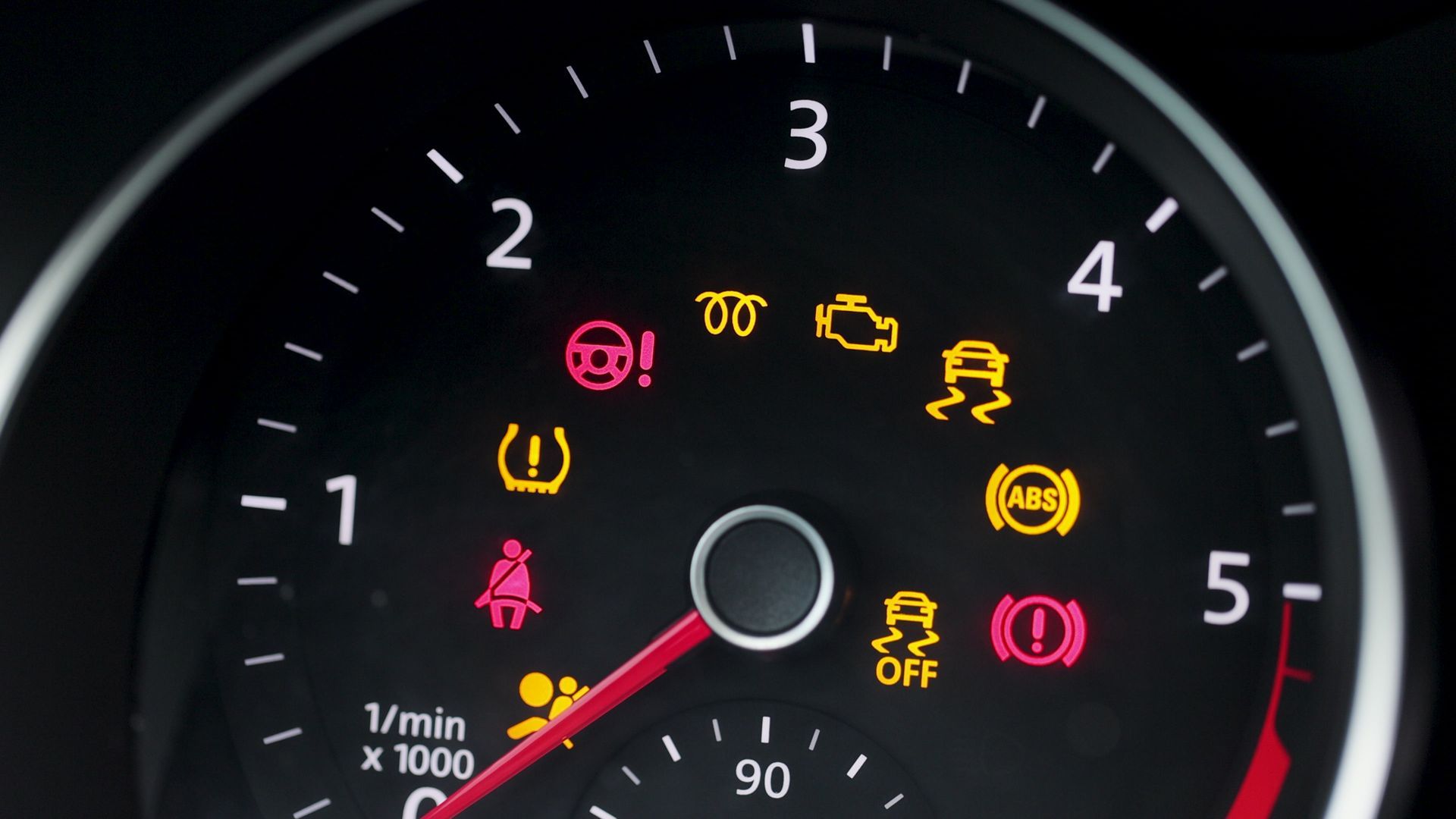
A red battery symbol makes most drivers wonder if the car will quit any second. The light does not measure battery charge directly. It tells you the charging system is not keeping up. Sometimes you can drive a short distance to a safe spot. Other times, you should pull over and call for help. Here is how to read the situation and avoid turning a small fault into a bigger repair.
What The Battery Light Means
The light turns on when the voltage from the alternator falls below the target that the computer expects. That can be a failing alternator, a slipping or broken serpentine belt, a loose or corroded cable, a blown fusible link, or a control issue with the voltage regulator. The battery is still doing its job for a while, but it is now the only source of power. Once the voltage drops far enough, electronics begin to shut down, and the engine can stall.
What to Do When The Light Comes On While Driving
Turn off high electrical loads to stretch the remaining reserve. Switch off seat heaters, rear defrost, and non-essential accessories, and set the blower to a lower speed. If the power steering suddenly feels heavy or the temperature gauge rises, the belt may have come off. In that case, pull over as soon as it is safe. A missing belt can stop the water pump on many engines, which risks overheating in minutes.
When You Can Creep To A Shop And When To Stop
You can usually drive a short distance if the light is on, but the engine runs normally, steering assist feels normal, and the temperature gauge stays steady. Keep the route short and simple, avoid night driving, and head straight for the nearest safe parking spot or repair facility.
Stop immediately if you see the temperature rising, smell hot coolant, lose steering assist, or the dashboard starts flickering and the engine misfires. Those are signs that the voltage is collapsing or the belt is gone, and continuing can cause expensive damage.
Common Causes We See In South Louisiana
Heat, humidity, and stop-and-go traffic are tough on cables and alternators. Frequent culprits include worn brushes inside the alternator, a failing internal regulator, belt slip from a weak tensioner, or corrosion at the battery terminals and main grounds. On some trucks, the alternator output wire uses a fusible link that can open after a short jump start. Diesel pickups add a heavier electrical load for glow plugs and grid heaters, so marginal systems show symptoms sooner on cool mornings.
Simple Checks You Can Do Safely
- Look Under The Hood For A Belt: With the engine off, confirm the serpentine belt is present and looks intact.
- Glance At The Battery Terminals: White or green crust means corrosion that increases resistance. Do not scrape while connected.
- Sniff And Listen: A hot electrical smell or a loud whine from the alternator area suggests a failing component.
- Watch The Gauges: Rising temperature or dimming lights mean stop soon and call for help.
How We Diagnose, Replace, And Verify Alternators In Our Shop
- Confirm the culprit: Rule out weak battery or corroded cables first.
- Electrical testing: Perform loaded voltage and ripple tests to assess alternator health.
- Belt drive check: Inspect belt, tensioner, and pulley alignment for slip or misalignment.
- Control signals: Verify smart-charging commands and wiring integrity.
- Quality replacement: Install OE or OE-quality alternator matched to your vehicle.
- Connections refreshed: Clean, tighten, and protect all main power and ground points.
- Correct belt setup: Set belt tension and routing exactly to spec.
- Diesel verification (if applicable): Confirm alternator supports glow plug/grid heater loads at idle.
- Prove-out under load: Recheck hot/cold output and ripple with lights, blower, and defroster on.
- Road test & documentation: Drive with accessories on, then provide test results, recorded torque specs, and a parts-and-labor warranty.
Drive With Confidence After The Fix With Riley’s Auto & Diesel Repairs In Lacombe, LA
If the battery light is on, we can pinpoint the exact cause and get you back on the road quickly. Our technicians test the battery and alternator under load, inspect belts and tensioners, clean and secure grounds, and verify charging voltage on a road test so the light stays off.
Schedule a visit with
Riley’s Auto & Diesel Repairs in Lacombe, LA, and leave with reliable starts and a steady dashboard.